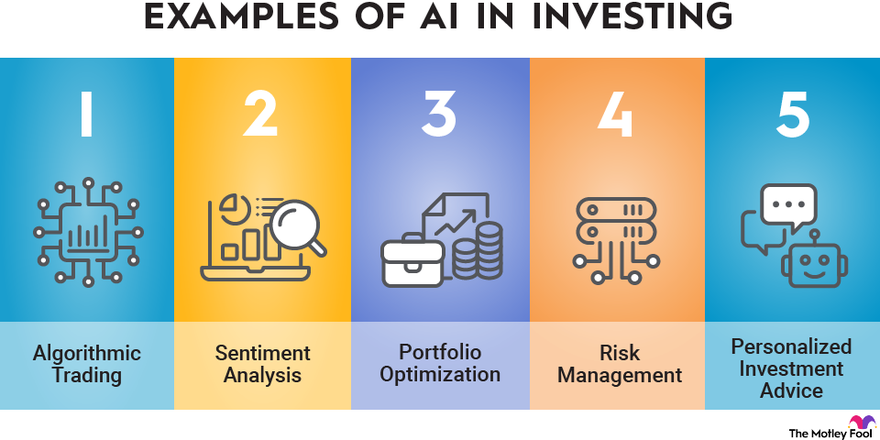
The AI and machine (ML) model utilized by the stock trading platforms as well as prediction platforms must be assessed to ensure that the data they offer are reliable, reliable, relevant, and applicable. Models that are poorly designed or has been exaggerated can result in inaccurate forecasts as well as financial loss. We have compiled our top 10 suggestions on how to evaluate AI/ML-based platforms.
1. Know the reason behind the model as well as the way to apply it.
Clarified objective: Determine the objective of the model and determine if it's intended for trading on short notice, investing in the long term, analyzing sentiment, or managing risk.
Algorithm Transparency: Make sure that the platform reveals what kinds of algorithms are used (e.g. regression, neural networks for decision trees, reinforcement-learning).
Customizability: Determine if the model can be adapted to your particular strategy of trading or risk tolerance.
2. Review the performance of your model using by analyzing the metrics
Accuracy Test the accuracy of the model's predictions. Do not rely solely on this measure, but it could be inaccurate.
Accuracy and recall. Evaluate whether the model is able to accurately predict price fluctuations and minimizes false positives.
Risk-adjusted Returns: Check if a model's predictions yield profitable trades taking risk into account (e.g. Sharpe or Sortino ratio).
3. Check the model by Backtesting it
Performance from the past: Retest the model using historical data to see how it would have performed in past market conditions.
Tests with data that were not used for training: To avoid overfitting, test the model using data that was not previously used.
Scenario-based analysis involves testing the model's accuracy under different market conditions.
4. Make sure you check for overfitting
Signs of overfitting: Search for models that do exceptionally good on training data however, they perform poorly with unobserved data.
Regularization methods: Ensure that the platform does not overfit when using regularization methods such as L1/L2 and dropout.
Cross-validation - Ensure that the platform utilizes cross-validation to test the generalizability of the model.
5. Assess Feature Engineering
Relevant Features: Check to determine whether the model includes significant features. (e.g. volume prices, technical indicators, prices as well as sentiment data).
Features selected: Select only those features that are statistically significant. Beware of irrelevant or redundant data.
Updates to dynamic features: Make sure your model has been updated to reflect new features and market conditions.
6. Evaluate Model Explainability
Interpretability (clarity): Be sure to verify whether the model can explain its assumptions clearly (e.g. the value of SHAP or feature importance).
Black-box model Beware of platforms that employ models that are overly complicated (e.g. deep neural networks) without describing the tools.
User-friendly insights : Determine if the platform is able to provide actionable information in a format that traders can easily understand.
7. Assessing Model Adaptability
Changes in the market: Check whether the model can adapt to changes in market conditions, for example economic shifts or black swans.
Check to see if your platform is updating its model on a regular basis by adding new data. This can improve performance.
Feedback loops: Make sure your platform incorporates feedback from users or real-world results to improve the model.
8. Check for Bias or Fairness
Data bias: Make sure the information used to train is accurate to the market and free of biases.
Model bias: Find out if you are able to actively detect and reduce the biases in the forecasts of the model.
Fairness. Check that your model doesn't unfairly favor specific industries, stocks, or trading methods.
9. Assess Computational Effectiveness
Speed: See if you can make predictions with the model in real-time.
Scalability: Check if the platform can handle huge datasets and a large number of users with no performance loss.
Resource usage: Check if the model has been optimized to use computational resources effectively (e.g. use of GPU/TPU).
Review Transparency & Accountability
Model documentation: Ensure that the platform has a detailed description of the model's architecture as well as its training process, as well as limitations.
Third-party auditors: Make sure whether a model has undergone an independent audit or validation by an independent third party.
Make sure there are systems in place to detect errors or failures in models.
Bonus Tips
User reviews: Conduct user research and research case studies to determine the effectiveness of a model in actual life.
Trial period - Use the demo or trial for free to try out the models and their predictions.
Customer Support: Verify that the platform provides solid technical or model-related support.
By following these tips you can evaluate the AI/ML models used by stock predictions platforms and ensure that they are accurate, transparent, and aligned with your goals in trading. Read the best inciteai.com AI stock app for blog examples including ai companies stock, ai stocks to buy now, stock market ai, market stock investment, learn stocks, ai companies to invest in, best stock sites, stock prediction website, ai stock investing, best ai stocks to buy now and more.

Top 10 Tips For Assessing The Scalability And Accuracy Of Ai-Based Stock Trading Platforms
To ensure AI-driven stock trading and prediction platforms are scalable as well, they should be able to deal with the increasing volume of data and the increasing complexity in markets, and also the demands of users. Here are the top 10 suggestions to determine scalability
1. Evaluate Data Handling Capacity
Tips: Make sure the platform can analyse and process large data sets (e.g., historic stock data, real-time market feeds, as well as other data sources like news or social media).
Why? Scalable platforms have to handle increasing data volumes without performance degradation.
2. Test Real-Time Processor Capabilities
Find out how the platform handles live data streams such as stock prices and breaking news.
Why: The real-time analysis of trading decisions is crucial, as delays can lead to you missing out on opportunities.
3. Cloud Infrastructure and Elasticity Cloud Infrastructure and Elasticity: Take a look
Tip. Determine whether the platform utilizes cloud-based infrastructure, such as AWS, Google Cloud and Azure, which can scale resources on demand.
Why is that the cloud platform's elasticity allows the size of the system to alter based on the usage.
4. Algorithm Efficiency
Tip : Check the computational efficiency and the accuracy of AI models for predictions.
The reason: Complex algorithms can be resource-intensive. Making them more efficient is essential to scale them.
5. Examine distributed computing and parallel processing
Find out if the platform uses distributed computing or parallel computing frameworks.
What are they: These technologies facilitate quicker data processing and analysis over multiple nodes.
6. Examine API Integration and Interoperability
Check the platform's capability to incorporate APIs from other sources.
What's the reason? Seamless integration enables the platform to adapt to new trading environments as well as data sources.
7. Analyze User Load Handling
Tip: Simulate high user traffic to test how the platform performs under pressure.
Why should scalable platforms offer the same level of performance regardless of the number of users.
8. Examine the the model's retraining and adaptability
Tip: Assess how frequently and efficiently the AI models are being retrained using new data.
The reason is that markets change and models must adapt quickly to keep their the accuracy.
9. Examine for fault tolerance and redundancy.
TIP: Ensure your platform has failover mechanisms to handle hardware or software failures.
The reason: Downtime is expensive for traders, and fault tolerance is vital to allow for the ability to scale.
10. Monitor Cost Efficiency
Tip: Consider the cost of scaling your platform. Be aware of cloud resources, such as storage of data and computing power.
The reason: Scalability should not be at the expense of insufferable costs. It is thus crucial to strike a balance between performance and cost.
Bonus Tip Future-Proofing
Ensure the platform is constructed to integrate new technologies (e.g., quantum computing and advanced NLP) and be able to adjust to changes in the regulatory environment.
Concentrating on these aspects will help you evaluate the scale of AI software for stock prediction and trading and ensure that they are sturdy effective, efficient and capable of sustaining future expansion. Follow the best website about investing with ai for site recommendations including best ai stocks, stock predictor, stock trading ai, can ai predict stock market, best stock prediction website, best ai penny stocks, best ai for stock trading, ai software stocks, best ai stock prediction, ai in stock market and more.